Custom Website Development vs WordPress: Which Is Right for Your Business?
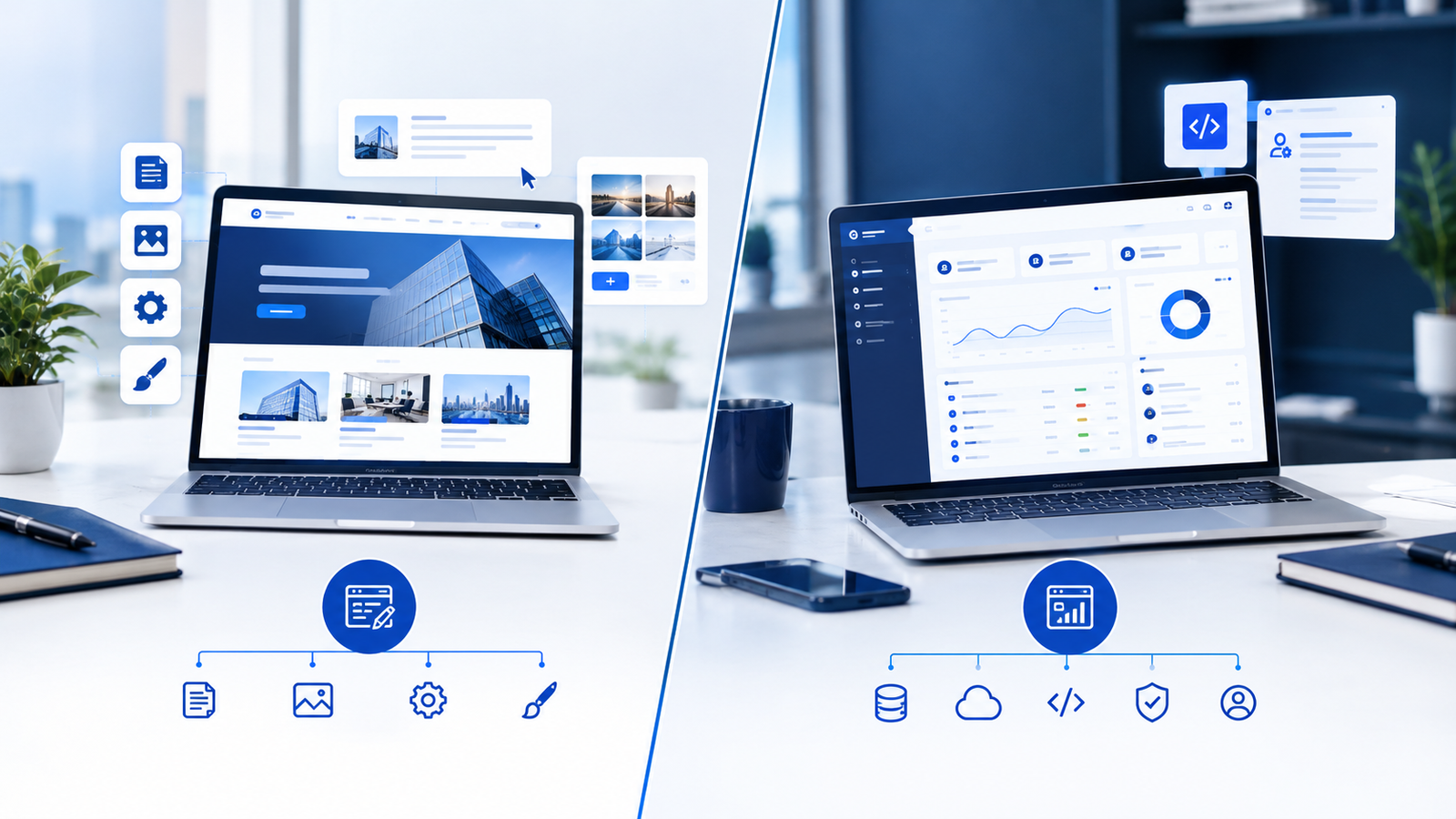
Custom Website Development vs WordPress: Which Is Right for Your Business? is not just a design or technology decision. It affects how customers understand the offer, how confidently they take the next step, and how easily your team can operate and improve the digital experience. The right approach depends on the business model, customer needs, current systems, and goals.
For businesses evaluating custom website development vs WordPress, start by defining the outcome before choosing a platform, feature, or supplier. A project might need to support a new launch, improve conversion, reduce manual work, clarify a complex service, or make the website easier to maintain. Clear goals help teams focus on work that matters instead of adding features without a business reason.
The most important areas to review include content workflows, business logic, integrations, user roles, maintenance, and flexibility. These considerations are connected. A visually appealing website may still struggle if the content does not answer buyer questions, the journey creates friction, or the underlying setup does not support daily operations.
Start with the business goal
Before planning website development, describe the business outcome in plain language. Decide who the site must serve, what that audience needs to understand, and what action should follow. That action may be requesting a consultation, comparing a product, starting a purchase, or contacting your team.
- Identify the primary audience and the problem they are trying to solve.
- Define the main action the page should support, such as an enquiry, purchase, or consultation.
- Agree on the signals that will show progress, including qualified enquiries, completed purchases, successful form delivery, or engagement with key pages.
- Record constraints such as launch date, budget range, internal resources, integrations, and content readiness.
Turn requirements into a practical plan
Use content workflows, business logic, integrations, user roles, maintenance, and flexibility as a starting point for a requirements workshop. Separate must-have launch needs from useful enhancements and future ideas. This makes the scope easier to estimate and helps prevent the project from growing without a clear reason.
- Describe each required workflow, not only the feature name.
- Identify which systems own the data and how information should move between them.
- Write acceptance criteria that can be tested before launch.
- Confirm who supplies content, product information, images, approvals, and credentials.
- Document assumptions, exclusions, dependencies, and the process for approving changes.
Make the customer journey clear
A useful digital experience helps visitors move from a question to a confident next step. For custom website development vs wordpress: which is right for your business?, make the offer understandable, explain who it is for, address likely objections, and show what happens after someone acts. Organize the page around buyer questions rather than internal company structure.
- Lead with a clear explanation of the offer and its intended audience.
- Provide relevant service details, product information, process steps, or specifications.
- Use genuine proof such as verified project examples, real testimonials, clear deliverables, or team expertise.
- Answer common questions about scope, timing, ownership, support, and next steps.
- Keep forms and calls to action focused, accessible, and easy to use on mobile.
Review technical quality before launch
Technical quality should be tested against the real risks of the project. Review content workflows, business logic, integrations, user roles, maintenance, and flexibility along with responsive layouts, forms, integrations, permissions, analytics, internal links, page titles, meta descriptions, and crawlability where relevant. The exact checklist depends on the platform and scope, so agree on it early.
- Test the primary user journeys on desktop and mobile.
- Check forms, confirmation messages, lead routing, and error states.
- Verify redirects and indexation requirements if URLs or platforms are changing.
- Review accessibility basics, including headings, labels, keyboard navigation, contrast, and alternative text.
- Assign owners to defects, retest fixes, and document launch approval.
Understand cost, ownership, and ongoing improvement
Cost depends on discovery, design, development, content, data preparation, integrations, testing, and support. Compare proposals by deliverables and assumptions rather than the headline number alone. Clarify who owns accounts, content, analytics, design files, code created for the project, and integration credentials.
- Ask what is included and excluded from the quoted scope.
- Confirm how extra work, delays, and third-party costs are handled.
- Understand platform, hosting, app, maintenance, and support costs where applicable.
- Request a handover package with access details and operating instructions.
- Assign an owner to review performance and prioritize improvements after launch.
How to evaluate a provider
A capable partner should explain trade-offs, risks, and the reasoning behind its recommendations. Ask: “How will you validate that the agreed requirements have been met, and what will happen if the scope changes?” Look for a clear discovery process, written deliverables, relevant experience, practical quality assurance, transparent communication, and a realistic support plan.
Avoid choosing only on visual style or the lowest initial quote. The best fit is the provider whose capabilities, process, communication, and ownership model match the actual project. Be cautious of guarantees that depend on market conditions, customer behavior, or other factors outside the provider’s control.
Frequently asked questions
What should we prepare before starting?
Prepare your business goals, target audience, current website or platform, required workflows, content status, budget range, timing constraints, and the people responsible for approvals. You do not need every technical answer at the beginning, but you should be ready to discuss the business problem clearly.
How can we compare proposals fairly?
Give each provider the same brief and compare scope, assumptions, deliverables, testing, ownership, communication, support, and change management. Ask questions about anything that is vague or difficult to verify.
Can a website project guarantee leads or sales?
No responsible provider can guarantee a specific commercial outcome from a website alone. Results also depend on the offer, market demand, traffic quality, competition, and follow-up. Set measurable goals, build a reliable experience, and improve it using evidence.
Useful third-party resources
How Levox Infotech can help
Levox Infotech supports businesses across branding, digital experience, eCommerce, growth, and technology. For website development, the first step is to understand your business model, current setup, priorities, and what a useful result should look like. The right recommendation may be a new build, a focused improvement, an integration, or a more connected digital growth plan.
Discuss your website or digital growth requirements with Levox Infotech